Choosing the right Pvc Urine Bag Film affects safety, comfort, sealing, and product reliability. The film is not merely a transparent layer. It forms the bag’s flexible, leak-resistant body and supports dependable urine collection during daily use. A poor selection may cause stiff handling, weak seams, unpleasant odor, or premature tearing.
Medical-film specialist Dr. Elena Marquez explains, “A reliable urine bag begins with controlled material performance, not attractive appearance.” Her point deserves attention. Buyers should examine PVC formulation, plasticizer stability, thickness uniformity, tensile strength, and tear resistance. Clear film helps users inspect fluid levels and color. Smooth surfaces reduce residue and simplify visual checking. Strong heat-sealing performance protects the connection between the bag, tubing, and outlet.
The right specification depends on the intended application. Bedside drainage bags may require larger dimensions and stronger hanging points. Leg bags usually need thinner, softer film for movement and discreet wearing. Sterilization compatibility also matters. The selected film must retain flexibility after processing, packaging, and storage. It should support controlled extractables, low odor, and consistent production quality. Supplier documentation remains essential. Ask for technical data, batch controls, and testing evidence.
No film is perfect. A softer structure may improve comfort but reduce puncture resistance. Greater thickness can strengthen the bag while increasing stiffness and material cost. That trade-off deserves careful review. This guide will examine each decision clearly, helping manufacturers compare Pvc Urine Bag Film options with practical judgment rather than relying on appearance alone.
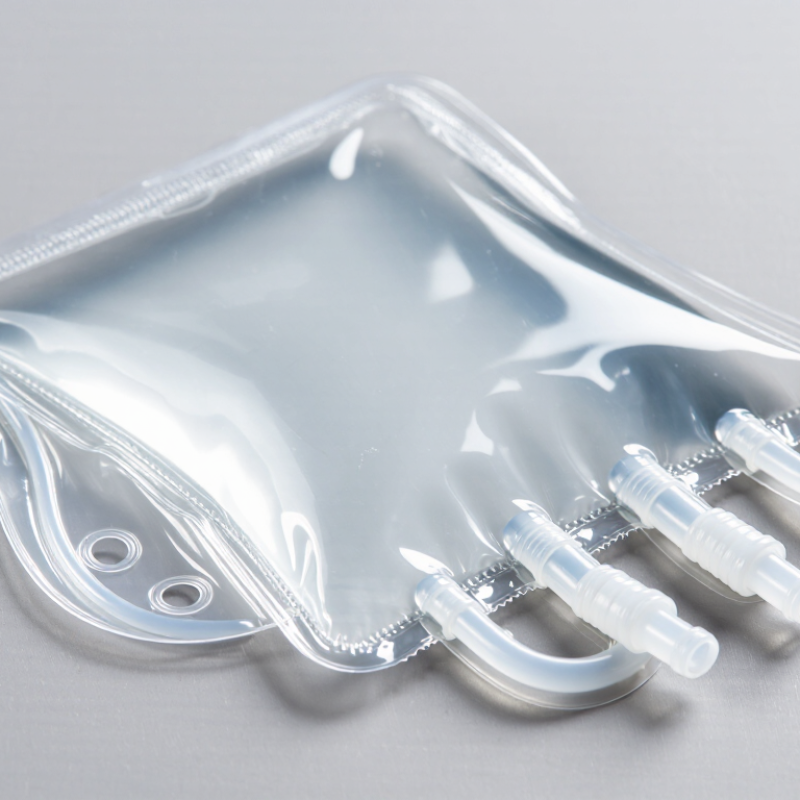
Choosing PVC film starts with use requirements, not the lowest resin price. For a 2,000 mL urine bag, the film must hold volume without excessive stretching. ISO 8669-2 should guide testing for urine drainage bag performance, including leakage resistance, capacity, outlet function, and connection security. A full bag may press against a bed rail, creating uneven stress around welded seams. Test filled bags at 2,000 mL during lifting, hanging, and outlet operation. Check puncture resistance, seam strength, clarity, flexibility, and low-temperature behavior. PVC formulation also matters. Plasticizer migration, odor, and extractables require documented evaluation.
The CDC reports that 15%–25% of hospital patients receive urinary catheters, while catheter-associated infections represent about 75% of hospital-acquired urinary tract infections. These figures are not proof that film causes infection. However, poor drainage, unclear graduations, or weak seals can complicate safe handling. Choose film that supports readable volume markings and stable tubing connections. Request batch records, biocompatibility evidence, and validation data. Do not accept one certificate alone. Real-world failures can reveal gaps.
Tips: Request samples using the final film thickness and welding settings. Fill each bag to 2,000 mL, then inspect it after 24 hours. Repeat testing after sterilization or simulated transport. Transparent film helps staff observe sediment, but appearance is not performance. We sometimes overvalue clarity. Measure it.
Choosing the best PVC urine bag film starts with gauge, clarity, and flexibility. A 0.20 mm film feels lighter and bends easily around the leg. However, it may require stronger sealing and careful handling. A 0.35 mm film offers better puncture resistance and a firmer shape. It can also feel less comfortable during movement. The practical middle range is often 0.25–0.30 mm, but testing should decide.
Clarity supports visual inspection of urine color, sediment, and filling level. Measure haze and light transmission using ASTM D1003, not by appearance alone. Flexibility should be checked after folding, hanging, and exposure to low temperatures. ASTM D882 can compare tensile strength and elongation between film samples. A 2024 Grand View Research report valued the global medical plastics market at over USD 30 billion, showing strong demand for controlled medical-material performance. Still, market growth does not prove one film is suitable.
Tips: Use a calibrated micrometer across several points. Record thickness variation, not only the average. Test welded seams after repeated bending. Check whether clear film becomes cloudy after sterilization. The 2023 Fortune Business Insights medical plastics report projected continued market expansion, but it offers no substitute for bag-specific validation. In practice, I would choose the thinnest film that passes leak, seam, drop, and flexibility tests. Thicker is not automatically safer. That assumption deserves review.
Choosing PVC urine bag film begins with a safety question: is DEHP present, and is its level justified? The European Chemicals Agency lists DEHP as a substance of very high concern because of reproductive toxicity and endocrine-disrupting properties. REACH Annex XVII generally limits DEHP, DBP, BBP, and DIBP to 0.1% by mass in plasticised articles, although medical-device exemptions and conditions must be checked carefully. A supplier’s “DEHP-free” statement is useful, but incomplete.
Consider safer plasticiser systems, such as citrate or other validated alternatives. Do not judge them by chemistry alone. Film samples should undergo extractables and leachables testing, simulated urine exposure, sterilisation assessment, and aging studies. Flexing matters. A film may pass a fresh-sample test yet become brittle near the outlet after months of storage. That failure is easy to overlook.
ISO 10993-1:2018 requires biological evaluation according to contact type and duration. Urine-contacting film still needs a risk-based assessment, including cytotoxicity, sensitisation, irritation, and chemical characterisation where applicable. The ISO standard does not certify a material automatically. It guides evidence. In practical qualification, review the full formulation, not only the resin name. Batch records, supplier change controls, and test reports should connect clearly to the finished bag. I would also question results from only one production lot. That is not always enough. Test data can look reassuring while real-world folding, heat, and prolonged contact reveal weaknesses.
| Film Option | Plasticizer or Polymer System | DEHP Status | ISO 10993 Safety Considerations | REACH Compliance Checks | Key Performance Characteristics | Recommended Documentation |
|---|---|---|---|---|---|---|
| PVC with DEHP | Polyvinyl chloride plasticized with di(2-ethylhexyl) phthalate | Contains DEHP; not a preferred option where DEHP-free requirements apply | Requires a biological evaluation based on the actual finished device, contact type, contact duration, processing, and extractables. Chemical characterization and toxicological assessment are important because DEHP can migrate from PVC under some conditions. | DEHP is listed as a REACH Substance of Very High Concern. Check current Annex XIV and Annex XVII requirements, intended market, concentration, and any applicable medical-device provisions. | Generally flexible, weldable, transparent, and cost-effective; established processing performance. | Full formulation disclosure, DEHP content statement, migration or extractables data, ISO 10993 biological evaluation, and current REACH SVHC declaration. |
| PVC with DINCH | PVC plasticized with diisononyl cyclohexane-1,2-dicarboxylate | DEHP-free formulation when verified by formulation and analytical data | Do not assume equivalence to DEHP solely from the alternative-plasticizer name. Evaluate cytotoxicity, irritation, sensitization, chemical characterization, and toxicological risk for the finished film and fluid pathway. | Confirm that all intentionally added substances and relevant impurities comply with REACH. Request a current SVHC declaration and restricted-substance statement for the complete formulation. | Flexible PVC processing, heat sealing, transparency, and puncture performance can be comparable to conventional plasticized PVC when properly formulated. | Plasticizer identity and concentration, extractables profile, finished-film test reports, ISO 10993 evaluation, and batch-change notification controls. |
| PVC with TOTM | PVC plasticized with tris(2-ethylhexyl) trimellitate | DEHP-free formulation when verified by formulation and analytical data | Assess the finished device rather than relying only on raw-material status. Pay particular attention to chemical characterization, extractables, residual processing chemicals, and irritation or sensitization endpoints where relevant. | Verify REACH registration or exemption status for relevant substances, SVHC communication obligations, Annex XVII restrictions, and compliance of additives, inks, adhesives, and colorants. | Typically supports flexible, durable, and heat-sealable PVC films; may provide lower volatility than some conventional phthalate systems. | Supplier declaration, composition control, extractables and leachables testing, sterilization compatibility, and finished-product biological evaluation. |
| PVC with DEHT | PVC plasticized with di(2-ethylhexyl) terephthalate | DEHP-free formulation when verified by formulation and analytical data | Require finished-film biological evaluation and chemical characterization. Testing should reflect the intended urine-contact pathway, storage period, sterilization method, and any skin-contact exposure. | Check the current REACH Candidate List, Annex XVII restrictions, supplier declarations, and the status of all additives and processing aids used in the film. | Can provide flexible PVC processing, good weldability, and suitable clarity when the formulation is optimized for medical-film production. | Plasticizer specification, migration data, ISO 10993 evidence, sterilization-aging data, and change-control records. |
| PVC with other non-DEHP plasticizers | Alternative ester, polymeric, or specialty plasticizer system | DEHP-free only if the complete formulation and analytical verification confirm no DEHP is intentionally added or present above the applicable limit | A “DEHP-free” label does not establish biocompatibility. Review the complete biological evaluation plan and identify potential leachables from plasticizers, stabilizers, pigments, adhesives, and printing inks. | Obtain a substance-level REACH declaration rather than a generic compliance statement. Verify SVHC communication, restricted substances, and applicable concentration thresholds. | Performance varies significantly; confirm flexibility, tear strength, seal strength, clarity, odor, and long-term storage stability through product testing. | Complete bill of materials, technical data sheets, analytical screening, extractables profile, ISO 10993 evaluation, and production-change controls. |
| TPU or EVA alternative film | Thermoplastic polyurethane or ethylene-vinyl acetate; not PVC-based | No PVC-associated DEHP when PVC and DEHP are absent; confirm additives and multilayer components | Evaluate the actual polymer grade, additives, colorants, adhesives, and manufacturing residues under the relevant ISO 10993 endpoints. Polymer substitution does not remove the need for device-specific biological evaluation. | Review the REACH status of the polymer, catalysts, additives, adhesives, inks, and multilayer tie materials. Confirm SVHC and Annex XVII declarations for the complete article. | May offer good flexibility and soft-touch properties; sealing temperature, transparency, urine compatibility, barrier performance, and cost may differ from PVC. | Polymer-grade specification, multilayer structure, extractables and leachables data, seal validation, sterilization compatibility, and ISO 10993 biological evaluation. |
Choosing the Best PVC Urine Bag Film: Validate Performance
PVC urine bag film must perform under handling, bending, filling, and storage. Appearance alone is not enough. ASTM D882 helps measure tensile strength and elongation in the machine and transverse directions. These results reveal whether the film stretches evenly or tears during use. Test conditioned specimens, record thickness, and compare several production lots. A single impressive result can mislead.
Seal quality deserves equal attention. ASTM F88 measures seal strength by peeling joined film sections under controlled conditions. Test samples from the beginning, middle, and end of the sealing roll. Check the seal after aging, bending, and exposure to expected storage temperatures. A high value is useful, but failure mode matters too. Clean peeling may differ from film tearing or irregular separation. I have seen strong films fail because the sealing window was too narrow. That weakness is easy to overlook.
Tips: Use calibrated equipment and documented sampling plans. Test both film directions. Keep temperature, speed, and specimen width consistent. Review raw curves, not only average values. Do not treat ASTM results as a complete product assessment; closure design, leakage testing, and biocompatibility still require separate review. Some test results may look acceptable but remain difficult to reproduce. Investigate them before approval.
Validated performance comparison using ASTM D882 tensile strength and ASTM F88 seal strength.
The chart compares representative PVC film constructions by tensile strength at break in the machine direction and heat-seal strength. Higher ASTM D882 values indicate greater resistance to stretching and tearing, while higher ASTM F88 values indicate stronger sealed joints. Final film selection should also consider thickness, flexibility, sterilization compatibility, and clinical-use requirements.
Choosing the best PVC urine bag film requires more than comparing thickness and price. Supplier auditing often reveals risks hidden inside a smooth sample roll. Ask for the ISO 13485 certificate, its valid dates, and its exact production scope. A certificate must match the facility making your film.
Review GMP controls at the line level. Check how operators control mixing, extrusion temperature, surface cleanliness, and roll winding. Request records for calibration, equipment maintenance, and nonconforming material. During an audit, inspect the production floor, not only the meeting room. A clean sample does not prove consistent production. I have seen attractive film samples fail when seals became cloudy or weak after storage.
RoHS documentation should identify the tested material and relevant test methods. Do not accept a generic declaration without product and lot references. Confirm lot traceability from resin and additives to the finished roll. Each label should show the lot number, production date, operator or line code, and inspection status. Request a certificate of analysis for thickness, tensile performance, and sealing behavior. Test several lots, including one from routine production. This costs more, but one approved sample can create false confidence. Some audits feel incomplete because records look perfect; unusual results and corrective actions often provide more useful evidence. Ask how the supplier investigates a failed seal, missing label, or delayed test result. Their answer may reveal the real strength of the quality system.
The film should safely hold 2,000 mL without excessive stretching. Test filled bags while lifting, hanging, and operating the outlet. A full bag can press against a bed rail.
Common options range from 0.20 to 0.35 mm. A 0.20 mm film bends easily but may need stronger seals. A 0.35 mm film resists punctures better but may feel less flexible. The 0.25–0.30 mm range may offer balance. Testing must decide.
Clarity helps staff see urine color, sediment, and filling level. Measure haze and light transmission with calibrated equipment. Do not judge clarity by eye alone. Clear does not mean reliable.
Check puncture resistance, seam strength, tensile performance, flexibility, and low-temperature behavior. Use a calibrated micrometer across several points. Record thickness variation, not just the average. Small differences can matter.
Use the final film thickness and actual welding settings for samples. Fill each bag to 2,000 mL and inspect it after 24 hours. Bend the seams repeatedly, then check for leaks. Weak seams may appear acceptable at first.
Request formulation details, plasticizer information, batch records, and chemical test reports. Review extractables, leachables, simulated urine exposure, sterilization, and aging results. A “free-from” statement alone is incomplete. One certificate is not enough.
Apply a risk-based biological evaluation according to contact type and duration. Consider cytotoxicity, sensitization, irritation, and chemical characterization when appropriate. Connect the evidence to the finished bag. Resin information alone cannot prove safety.
Yes. Repeat leakage and flexibility testing after sterilization or simulated transport. Check whether the film becomes cloudy, brittle, or weak near the outlet. Storage can expose failures that fresh samples hide. I may overvalue new-sample results. That deserves review.
Choosing the right Pvc Urine Bag Film begins with clearly defining the product’s intended use, including a 2,000 mL capacity and conformity with ISO 8669-2 criteria. Film selection should balance a typical thickness of 0.20–0.35 mm with sufficient clarity, flexibility, puncture resistance, and ease of processing. Safety is equally important, so manufacturers should evaluate DEHP-free or alternative plasticizer systems, biological safety under ISO 10993, and REACH compliance.
Performance validation should include tensile and elongation testing according to ASTM D882, along with seal-strength testing based on ASTM F88 to confirm reliable bag construction. Supplier evaluation is also essential. Favor partners with ISO 13485 quality systems, documented GMP controls, RoHS compliance, consistent lot traceability, and reliable change-control procedures. A complete assessment of materials, testing data, production controls, and documentation helps ensure that the selected film supports safe, durable, and consistently manufactured urine bags.

Dahai Plastic