Top Urine Drainage Bag Film Manufacturers and Suppliers

Time:2026-09-26 Author:Henry
0%

Selecting reliable Urine Drainage Bag Film manufacturers requires more than comparing prices or catalog photographs. The film sits against a demanding clinical environment. It must support fluid containment, controlled flexibility, leak resistance, clear visual inspection, and dependable heat sealing. A weak seal may appear acceptable on a production line. It can fail beside a hospital bed.

Recent market studies from Grand View Research, Fortune Business Insights, and Mordor Intelligence report continued growth in urinary catheter and medical-device markets. Their findings point to aging populations, rising hospital admissions, and wider home-care use. However, these reports rarely separate Urine Drainage Bag Film from the finished drainage-bag category. That limitation matters. It makes supplier comparison less precise than many purchasing pages suggest.

Regulatory expectations also shape material selection. ISO 10993 supports biological safety evaluation, while ISO 11607 addresses packaging systems for terminally sterilized medical devices. Manufacturers should provide traceable resin information, thickness tolerances, seal-strength results, and sterilization compatibility data. Samples should be tested, not merely admired.

“Better is possible,” healthcare quality expert Atul Gawande has written. The principle fits this material choice. A better film can reduce waste, improve handling, and strengthen confidence during use. Yet no film performs perfectly in every design. Some materials improve clarity but sacrifice puncture resistance. Others seal well but feel too stiff. That trade-off deserves honest review.

This guide examines leading manufacturers and suppliers through documented capability, quality systems, customization experience, and supply reliability. The strongest option is not always the largest company. It is the supplier whose evidence matches the bag’s real clinical requirements.
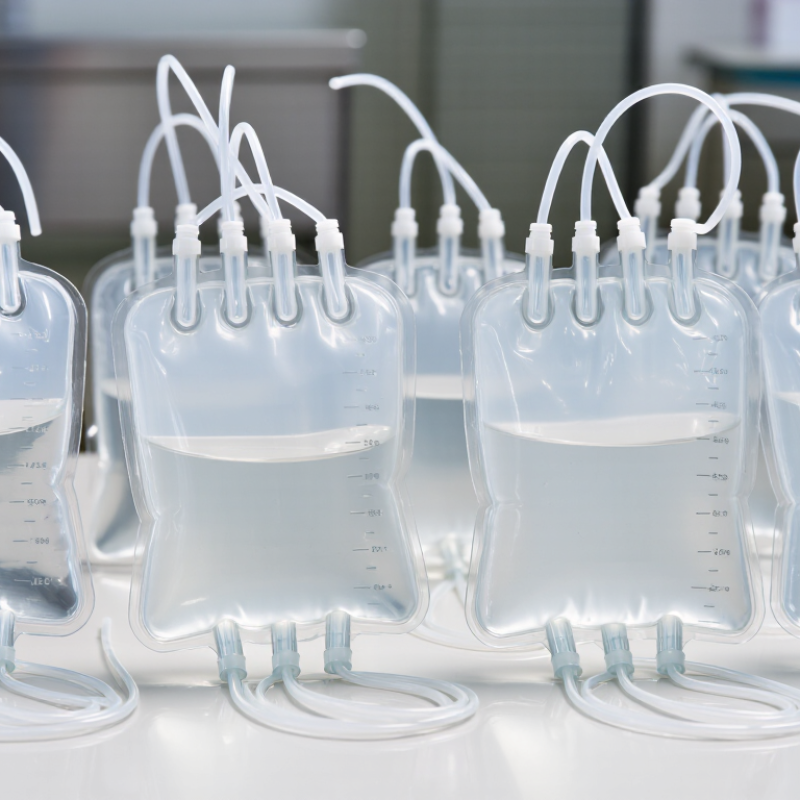
Top Urine Drainage Bag Film Manufacturers and Suppliers

Types of Urine Drainage Bag Films and Their Medical Uses

Urine drainage bag films must remain flexible, leak-resistant, and clear enough for quick visual checks. Polyvinyl chloride (PVC) is widely used because it can form soft, heat-sealed bags. Thermoplastic polyurethane (TPU) and ethylene-vinyl acetate (EVA) also appear in flexible medical-film constructions. Polyethylene may be used in bag layers, depending on the design. Each material behaves differently during forming and sealing.

Material choice follows the intended use. A bedside bag needs enough volume and sturdy seams; a leg bag needs a low-profile shape that moves comfortably under clothing. The CDC’s 2009 catheter-associated urinary tract infection guideline reports that 15–25% of hospitalized patients receive urinary catheters. This indicates broad clinical exposure, not proof that any film prevents infection. Small details matter. A cloudy film, sharp fold, or weak outlet seal can make routine checks harder.

Manufacturers and buyers should review film thickness, weld strength, clarity, and compatibility with sterilization and drainage-system components. Biocompatibility testing also matters, especially when additives or plasticizers are present. TPU may offer a softer feel, but it can cost more; PVC can be easy to process, yet its formulation deserves close review. No material is perfect. Specifications should match the bag’s intended use, and finished samples should be checked for leaks and seam defects.

Key Materials Used in Urine Drainage Bag Film Production

Top Urine Drainage Bag Film Manufacturers and Suppliers

Key Materials Used in Urine Drainage Bag Film Production

Urine drainage bag film depends on carefully balanced materials. Medical-grade polyvinyl chloride remains widely used because it offers flexibility, clarity, and reliable heat sealing. Polyethylene provides a softer feel and strong moisture resistance. Low-density polyethylene is especially useful for smooth, lightweight layers. Ethylene-vinyl acetate can improve softness and reduce cracking during bending. Material choice is not cosmetic.

Some suppliers use thermoplastic polyurethane when higher elasticity and abrasion resistance are needed. It can support demanding designs, but its cost may be higher. Plasticizers must be compatible with the polymer and controlled carefully. Stabilizers and processing aids help maintain film performance during manufacturing. Poor formulation can create odor, stiffness, or weak seams. That detail is easy to dismiss.

Experienced manufacturers examine both the resin and the finished film. They measure tensile strength, elongation, thickness, clarity, and seal strength. They also inspect surfaces for pinholes and uneven areas. Heat sealing needs consistent pressure and temperature. A film may look excellent yet fail after repeated folding. Practical testing should include bending, hanging, and connection-point stress. Real use exposes flaws that laboratory samples sometimes hide. This is where improvement starts.

Top Urine Drainage Bag Film Manufacturers and Suppliers - Key Materials Used in Urine Drainage Bag Film Production

Material or Film Component Typical Supply Form Primary Function in Urine Drainage Bag Film Common Film Structure or Use Key Performance Characteristics Important Quality and Compliance Considerations
Medical-grade flexible PVC Pellets or compound prepared for extrusion and calendering Flexible, weldable base material for transparent or translucent bags and tubing Single-layer PVC film or multilayer PVC construction; commonly used for collection bags, ports, and connecting components Good clarity, flexibility, heat-sealing performance, and cost efficiency Plasticizer selection, extractables, residual processing chemicals, sterilization compatibility, and biocompatibility evaluation must be controlled
Thermoplastic polyurethane (TPU) Medical-grade resin pellets or specialty film Provides flexibility, toughness, puncture resistance, and improved resistance to repeated handling Single-layer TPU film or a sealant and reinforcement layer in multilayer film High abrasion resistance, strong tear resistance, elastic recovery, and good weldability Hardness, hydrolysis resistance, sterilization method, and long-term contact performance should be verified for the intended design
Polyethylene (PE) Low-density polyethylene or linear low-density polyethylene pellets and films Acts as a flexible moisture barrier, sealant layer, or protective outer layer LDPE or LLDPE sealing layer; may be combined with other polyolefin layers Low moisture transmission, chemical resistance, heat-sealing capability, and lightweight construction Film uniformity, seal strength, pinhole control, odor, and compatibility with printing inks or adhesives should be assessed
Polypropylene (PP) Homopolymer or copolymer resin pellets Provides chemical resistance, stiffness, and dimensional stability for selected film or accessory applications Usually used in closure components, connectors, or stiffened multilayer sections rather than as the only flexible bag-film layer Good chemical resistance, low density, and relatively high heat resistance Flexibility at low temperature, weldability, and resistance to stress cracking must match the product design
Ethylene-vinyl acetate (EVA) Flexible copolymer pellets or blended compound Improves softness, flexibility, and heat-sealing behavior in selected film formulations Sealant or modifier layer in flexible multilayer film; may be blended with polyolefins Soft feel, good low-temperature flexibility, and relatively low sealing temperature Vinyl acetate content, migration profile, odor, seal performance, and compatibility with adjacent layers require evaluation
Thermoplastic elastomer (TPE) Pellets, compounds, or coextruded film Provides elastic flexibility and soft-touch characteristics without conventional rubber vulcanization Specialty flexible layer, gasket area, or integrated sealing component Elasticity, weldability, softness, and resistance to repeated flexing Formulation-specific extractables, sterilization stability, compression set, and bonding to the primary film must be tested
Plasticizers for PVC formulations Liquid additives blended into PVC compounds Increase PVC flexibility and reduce brittleness during film production and use Incorporated throughout flexible PVC film; non-phthalate alternatives are commonly specified for medical applications Controls softness, elongation, processability, and low-temperature flexibility Type, concentration, migration, extractables, toxicological profile, and applicable regional restrictions must be documented
Heat stabilizers and processing aids Powder, liquid, or pelletized additive packages Protect polymer during extrusion, calendering, welding, and thermal processing Primarily used in PVC and other heat-sensitive formulations Improved thermal stability, reduced discoloration, smoother processing, and more consistent film output Residual content, compatibility, odor, extractables, and compliance with the finished medical-device formulation must be verified
Adhesive tie layers Coextruded bonding resin, coating, or laminated adhesive Bond dissimilar polymer layers in multilayer films Used between barrier, sealant, reinforcement, or printable layers Interlayer adhesion, flexibility, resistance to moisture, and process compatibility Adhesive residues, delamination resistance, chemical compatibility, sterilization stability, and extractables should be evaluated
Printing inks and surface coatings Medical-use ink systems, protective coatings, or printable film layers Provide graduations, identification marks, instructions, and surface protection Applied to the outer surface or incorporated into a printable film layer Legibility, adhesion, abrasion resistance, and resistance to moisture and cleaning agents Ink migration, curing, odor, rub resistance, and compatibility with sterilization and packaging conditions must be controlled
Multilayer film construction Coextruded, laminated, or coated film roll stock Combines flexibility, sealing, strength, clarity, and barrier properties in one structure Typical design may combine a structural layer, tie layer, and heat-sealing layer; exact composition depends on the bag design Balanced tensile strength, tear resistance, seal integrity, flexibility, and fluid-contact performance Layer thickness, interlayer adhesion, seal-window validation, leak testing, particulate control, and traceability are essential

Note: Material selection depends on the bag design, intended use, sterilization method, storage conditions, regulatory market, and required fluid-contact performance. Values and formulations should be confirmed through supplier technical data, risk assessment, and finished-product validation.

How Urine Drainage Bag Films Are Manufactured and Tested

Urine drainage bag film production starts with selecting a polymer suited to fluid contact, flexibility, and reliable heat sealing. The resin is dried or blended as specified, then melted and formed into a thin sheet through extrusion. Operators monitor temperature, line speed, and film thickness. A small shift can affect how evenly the film seals.

After cooling, the film is wound into rolls and checked for visible defects such as pinholes, streaks, or uneven edges. Samples are measured for thickness and tested for tensile strength and elongation. Seal tests matter too: weak seams may leak, while excessive heat can distort the material. Small details matter.

Quality checks continue during bag conversion, because film performance alone cannot prove that a finished bag is sound. Manufacturers may inspect seals, apply pressure or leak tests, and verify that connectors fit as intended. Testing plans should match the product’s intended use and applicable requirements. Test results need traceable records, and measuring equipment needs calibration.

Aging studies can help assess whether film properties change during storage, though accelerated aging cannot reproduce every real-world condition. No single test tells the whole story. Production teams review failed samples and adjust process settings, but a neat result in the laboratory still deserves cautious interpretation before routine release.

Selecting Reliable Urine Drainage Bag Film Manufacturers

Selecting a urine drainage bag film supplier requires more than comparing price per kilogram. Start with the film’s intended use, thickness tolerance, seal strength, puncture resistance, and compatibility with the bag’s drainage ports. Ask for resin traceability, lot-specific certificates, and documented change control. A sample roll is useful, but it cannot replace production-line validation.

The World Health Organization’s 2022 Global Report on Infection Prevention and Control estimates that 7 in 100 acute-care patients in high-income countries, and 15 in 100 in low- and middle-income countries, acquire at least one healthcare-associated infection. This figure does not measure urine bag film performance. It does, however, underline why manufacturers should document material cleanliness and support consistent, sealed product construction. Request test methods and actual results, not only a general claim of quality.

Check whether the supplier can demonstrate stable film extrusion, reliable sealing across routine temperature changes, and clear procedures for handling defects. Review aging data and assess whether the film remains flexible after storage. A clean-looking roll proves little. Even a polished audit can miss a weak seal, so inspect finished bags and repeat checks across multiple lots. No supplier is flawless; the useful question is how openly problems are reported and corrected.

Global Supplier Evaluation: Quality, Compliance, and Delivery Support

Top Urine Drainage Bag Film Manufacturers and Suppliers
Global Supplier Evaluation: Quality, Compliance, and Delivery Support

Choosing a supplier for urine drainage bag film involves more than comparing prices. Ask how film thickness, seal strength, and material consistency are checked across production runs. Request recent test records and traceability details for incoming materials and finished rolls. Clear documentation helps buyers investigate defects instead of guessing. Review applicable quality and regulatory documentation for the intended market, and confirm that certificates are current and relevant. A document alone is not proof of dependable production.

Tips: Ask for a sample roll. Check for pinholes, uneven edges, and inconsistent thickness. Agree on acceptance criteria before ordering.

Delivery support deserves equal attention. Compare quoted lead times with actual production capacity, stock availability, and shipping arrangements. Ask how the supplier reports delays and handles changes to specifications. A polished audit file can still miss a weak point: communication may slow down when orders become urgent. Test responsiveness with specific questions before committing. Keep evaluation records, including sample results and delivery performance, so future decisions rely on evidence rather than memory.

FAQS

Which materials are used for urine drainage bag films?

Common options include PVC, TPU, and EVA. Some designs also use polyethylene layers.

Why does the intended use affect film selection?

Bedside bags need volume and sturdy seams. Leg bags need a low-profile shape that moves comfortably under clothing.

What should buyers inspect on a sample roll?

Check for pinholes, uneven edges, and inconsistent thickness. A quick look may miss defects, so inspect carefully.

Which film properties matter during production?

Review thickness, weld strength, clarity, and compatibility with sterilization and drainage-system components.

Does any film material prevent infection?

The article does not show that a film prevents infection. Material choice alone is not enough.

What records should buyers request from suppliers?

Request recent test records and traceability details for incoming materials and finished rolls. Check that quality documents are current and relevant.

How can buyers assess delivery support?

Compare quoted lead times with production capacity, stock, and shipping arrangements. Ask how delays are reported.

Why test supplier communication before ordering?

Urgent changes can reveal slow responses. Ask specific questions and record the replies; it is easy to overlook this step.

Conclusion

Urine Drainage Bag Film is a critical medical material used to produce reliable collection bags for hospitals, clinics, home care, and long-term patient management. Different film structures support various applications, including standard drainage bags, leg bags, bedside systems, and specialized designs requiring flexibility, transparency, odor control, or enhanced barrier performance. Common materials include medical-grade PVC, TPU, polyethylene, and multilayer polymer combinations, selected according to strength, softness, chemical resistance, and biocompatibility requirements.

Manufacturing typically involves precise film extrusion, thickness control, surface treatment, printing when needed, and careful heat-sealing compatibility. Finished films should undergo testing for tensile strength, puncture resistance, leakage prevention, transparency, dimensional stability, and biological safety. When selecting manufacturers and suppliers, buyers should evaluate production capacity, quality management systems, regulatory documentation, traceability, technical support, and delivery reliability. A dependable global supplier should also provide consistent batch performance, responsive communication, customized specifications, secure packaging, and practical logistics support to help medical product manufacturers maintain stable and efficient production.


Henry

Henry

Henry is a dedicated marketing professional with a profound expertise in the company's offerings. With years of experience in the industry, he possesses an impressive understanding of the market dynamics and consumer behaviors that drive success. Henry is committed to sharing his insights through......